Most carpenters know the feeling.
The job's wrapped up, the client's happy, the final invoice has gone out. From the outside everything looks fine. But sit down with a coffee a week later and try to work out what you actually made on it — and the number's foggy.
You can guess. You can pull bits out of Xero. You can dig through the timesheets and the supplier bills. But by the time you've got an answer, the next job is already underway and the problem hasn't been fixed.
This is the bit job costing is supposed to solve. Done properly, it tells you whether a build is making money while it's still live — not three weeks after handover.
What job costing actually is (and what it isn't)
Job costing is the practice of tracking every dollar you spend on a specific job — labour, materials, equipment, subcontractors, supplier bills, expenses — and comparing that against what you quoted.
It is not the same as accounting.
Your accountant gives you the year-end picture. The business made X, paid Y in expenses, owed Z in tax. That's important, but it's a rear-view mirror, and it tells you nothing about which specific jobs went well or where the leaks were.
Job costing zooms in. Job by job. Stage by stage. Line by line. It answers the question “did this build make us money — and if not, where did it go wrong?”
For a carpentry business running multiple jobs at once, that's the difference between feeling busy and knowing you're profitable.
Why carpentry jobs leak profit
Carpentry work is unusually exposed to small margin leaks. A few of the common culprits:
- Hours that don't make it onto a timesheet. An hour here, half a day there. By the end of a 12-week job, you've lost a week of labour value you've already paid for but never billed.
- Material returns and waste. You bought the timber for the whole build, but two pallets came back and never got credited properly.
- Variations that got talked through, not written down. Extra trim. A second coat. A scope creep the client now thinks was part of the original quote.
- Supplier price increases mid-build. The framing pack you quoted in February costs 8% more by April.
- Apprentice productivity miscounted. You quoted as if everyone was running at full speed. Reality is the second-year is doing about 60%.
None of these are anyone's fault, exactly. They're just the noise of doing the work. But unless you're capturing them somewhere, they show up as a thinner profit line at the end — and you don't know which lever to pull next time.
What to track on every job
The basics of job costing for a carpentry crew look like this:
- Labour by job and stage. Not just total hours — who did what, on which part of the build. Apprentices and qualified carpenters at different rates.
- Materials by job. Every supplier invoice, every Bunnings dock, attached to the right build.
- Equipment. If you're running scaff, a track saw rental, or a hire truck, it needs to land against the job that's using it.
- Expenses. Fuel, parking, council fees, anything you'd pay back to a contractor — it all belongs on the job.
- Variations. Logged the day they happen, with a quoted cost and a sign-off from the client.
If those are all sitting in one place, tied to the same job, you can run a back-cost report at any point in the build and see exactly where you are.
The estimate-versus-actual view
The single most useful number in job costing is the live comparison between what you quoted and what you've actually spent so far.
It sounds obvious. In practice, very few carpentry businesses can answer it on demand.
That's because the data lives in different places. Hours in one spreadsheet. Supplier bills in Xero. Variations in someone's phone. Pulling it together is a manual job, so it only happens at the end — by which point, if the answer is bad news, it's too late to act on.
Live back costing closes that gap. The hours your crew logs, the supplier bills coming in, the variations going out — they all flow into the same job and roll up into a single estimate-versus-actual report you can check on a Monday morning over coffee.
If labour is tracking 15% over on a job that's only 40% through, that's the moment to do something about it — not eight weeks later.
Variations: the silent margin killer
Variations deserve their own callout because they're where most carpentry jobs lose the most money the most quietly.
A client asks for a small change. The carpenter on-site agrees. The work gets done. Three weeks later, the office invoices the original quote and the variation is either forgotten or remembered as “an inclusion”.
The fix is process, not software. Variations need a written quote, a client sign-off, and a clear link to the invoice they'll be billed against. Once that's the workflow, the variations stop disappearing into the build — and they stop chewing your margin.
NextMinute's invoicing tool tracks variations as separate line items against the job, so they roll into the next progress claim instead of getting lost.
Putting it into practice without rebuilding your whole business
The good news: you don't need a finance degree or a giant rebuild to get this right.
The carpenters who do job costing well usually have three things sorted:
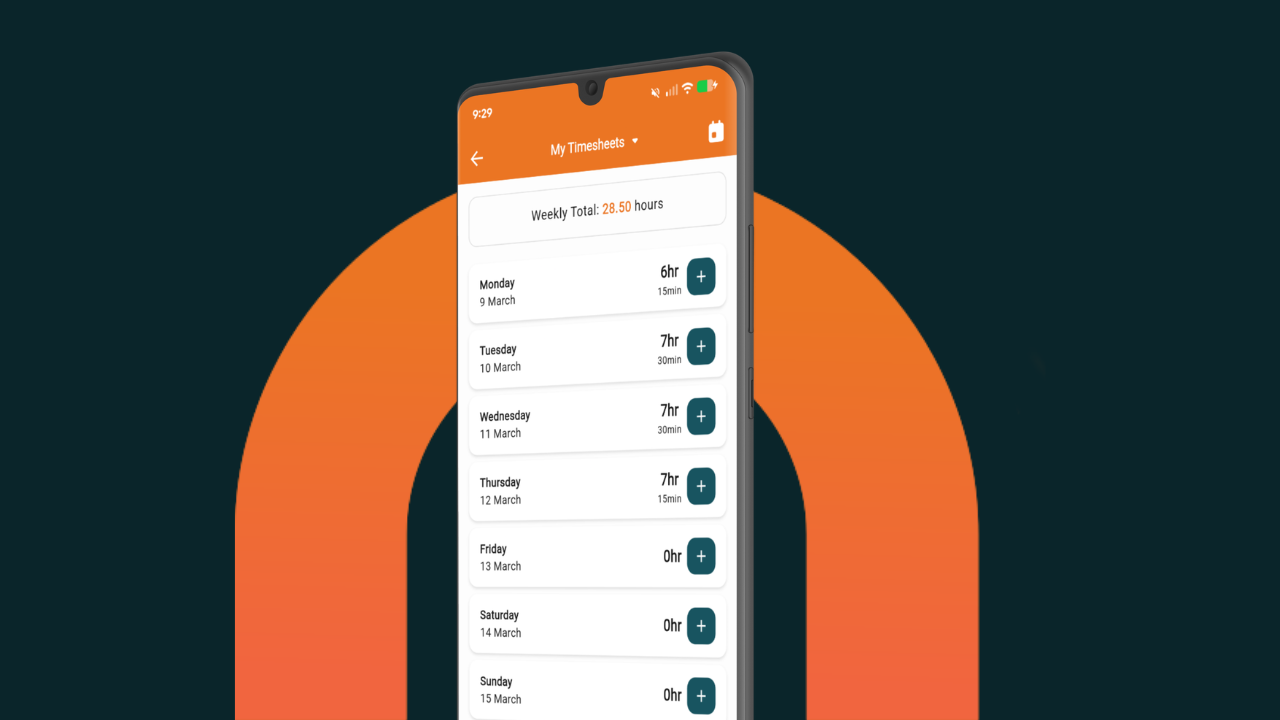
- One system the whole crew uses to log time, materials, and changes — usually a mobile app that's actually easy on-site, not a spreadsheet they fill in later.
- A live back-cost report that anyone in the office can pull up — not a once-a-month exercise.
- A discipline around variations — written down, quoted, approved, billed.
NextMinute does all three of those out of the box, which is why a lot of Australian carpentry crews end up there once they outgrow spreadsheets. But the principles work in any system — the important thing is that the data lives in one place and you can see it live.
What good job costing actually feels like
When job costing is working, you stop guessing.
You walk into the office on a Tuesday, pull up the job, and the answer to “are we still in the green?” is right there. If a build is heading the wrong way, you spot it early enough to pull labour, push back on scope, or have a conversation with the client. If it's running smoothly, you've got data to price the next one a little sharper.
It's the difference between running a carpentry business by feel and running one by numbers. The first one works for a while. The second one is what gets you growing.
If you want to see how the back costing side actually works in practice, the back costing page walks through it — or book a quick intro and someone on the team will show you on your own quote.