
Plenty of carpentry businesses started life on a spreadsheet.
A quote built in Excel. A schedule pencilled into another tab. A timesheet someone's partner fills in on a Sunday night. Variations scribbled on the back of a delivery docket and entered later — sometimes.
For a while, it all hangs together. Then the business gets a little bigger, the jobs get a little longer, and the spreadsheet that used to feel like a system starts to feel like a liability.
This post is for the carpentry crews who haven't quite made the jump yet — a sanity check on the signs that say it's time.
Why spreadsheets work in the early days
Spreadsheets are free. They are familiar. They don't make you sit through a sales demo. And for a one or two-person crew running a handful of jobs at a time, they actually do the job.
You can build a quote in Excel. You can total up materials. You can keep a list of clients. You can stick a Gantt chart together if you really want to.
The problem isn't that spreadsheets are bad. It's that they don't scale with how a carpentry business actually grows.
The signs your carpentry business has outgrown spreadsheets
A few patterns start to show up. Most carpenters recognise at least two or three of these straight away:
- The crew is texting you their hours instead of filling anything in.
- You can't remember which version of the quote you actually sent the client.
- Variations are being agreed on site and remembered later — or worse, forgotten.
- You finish a job and have no idea whether you actually made money on it.
- The schedule lives on a whiteboard in the office that the crew can't see from site.
- Photos of the build are scattered across three different phones.
- Progress claims are taking a full Saturday morning to put together.
- You've got two versions of the same client's details in different spreadsheets, and the wrong one ended up on the invoice.
- You spend more time chasing information than running the business.
None of these are disasters on their own. But they're warning lights. They mean the way you're running jobs is leaking time, accuracy, or cash — and they get worse, not better, as you grow.
What spreadsheets can't do that quietly costs you money
The honest truth is this: spreadsheets are great at recording. They're terrible at connecting.
A quote in a spreadsheet doesn't know what hours your crew logged against that job. A timesheet doesn't know what supplier bills came in last week. A list of variations doesn't push into your invoice.
So at the end of the job, you're stitching it all together by hand — guessing at the gaps, working off memory, and hoping nothing important got missed.
That's where the margin leaks come from. Not in one big mistake, but in a hundred small ones: an extra half-day of labour that didn't make it to the invoice, a variation that never got signed off, a material order someone forgot to add to the job costs.
A spreadsheet can't catch those. A connected system can.
Where job management software steps in
Once a carpentry business is running more than a couple of jobs at once, the value of having everything tied to the same job in one place jumps significantly.
NextMinute is built for that exact moment in a tradie's business — when spreadsheets are starting to crack and the crew needs something they can actually use on-site.
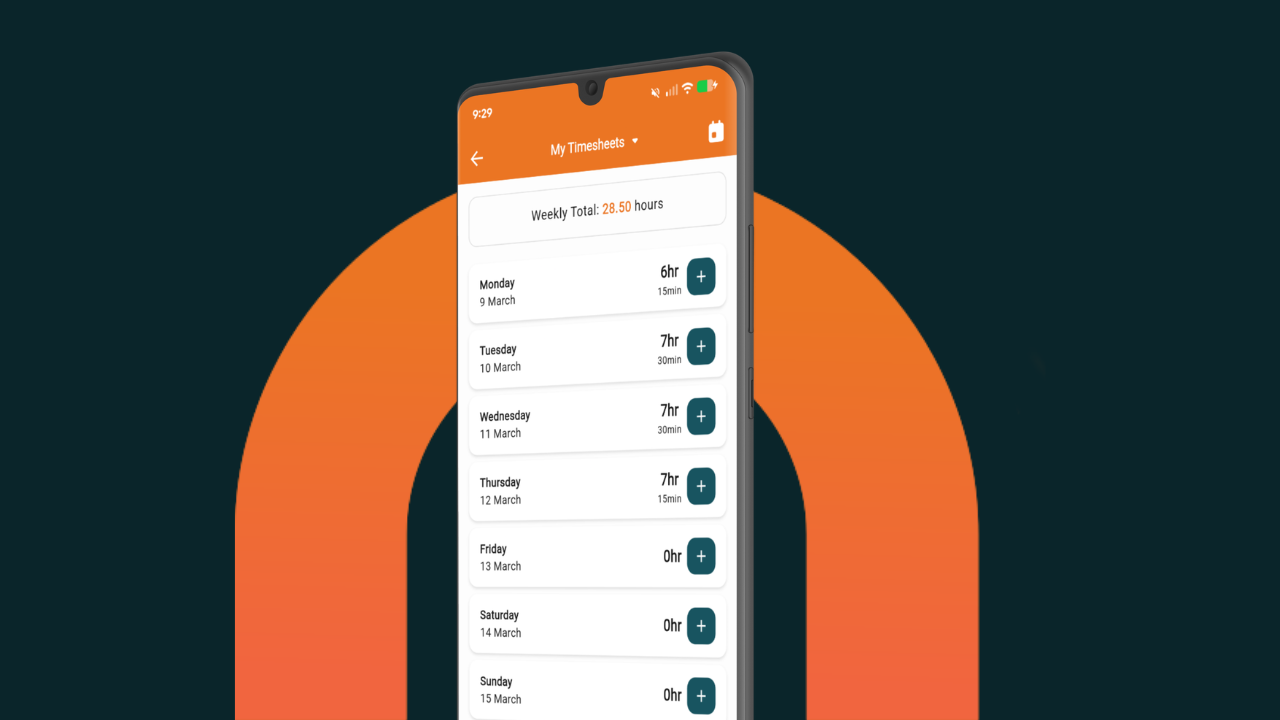
It gives you one place for quoting, scheduling, timesheets, job costing, variations, and invoicing — all tied back to the job they belong to. The crew use it from their phones on-site. The office sees the same data in real time.
You stop transcribing. You stop second-guessing. The job becomes the single source of truth instead of nine spreadsheets and a group chat.
What actually changes when you make the switch
The carpentry crews who move off spreadsheets tend to report the same handful of things in the first few months:
- Quotes get out faster, because the templates and price books are reusable.
- Timesheets stop being a Sunday-night job for the partner doing the books.
- Variations get logged the day they happen, not weeks later.
- Progress claims that used to take three hours take twenty minutes.
- You can answer “are we making money on the Smith job?” without doing a half-day spreadsheet exercise.
- The crew stop ringing you ten times a day asking where the plan is.
It's not magic — it's just what happens when the job stops being scattered across multiple places and starts living in one.
How to make the switch without throwing the business into chaos
The other thing worth saying: you don't have to flip everything overnight.
Most carpentry crews start with the one thing that's hurting them most — usually timesheets, or quoting, or back costing — and build out from there. Inside a few weeks the system covers the full job lifecycle, but the change feels gradual instead of dramatic.
The NextMinute team will help you bring your existing quotes, price books, and contacts across during a free trial, so you're not starting from a blank slate. And the support team is Australian, not on the other side of the world, which matters more than you'd expect when you've got a question at 3pm on a Friday.
So is it time?
If you're nodding along to half the signs above, probably yes.
Spreadsheets aren't the problem in themselves. They're just the wrong shape for a carpentry business with multiple live jobs, a crew, and clients who expect a professional response. You can absolutely keep running on them — but you'll be putting in more effort to get less clarity, and that gap grows every year.
If you want to see what the alternative actually looks like, the carpenter software page walks through it, or you can book a 15-minute intro and have a quick chat with someone on the team.
Either way — once you've made the switch, the spreadsheets quietly become what they always should have been: a backup, not a business plan.