
Quick answer: To work out what a landscaping job really cost, you add up every dollar the job consumed (crew hours at their true cost, plants and materials, machinery hire, subbies, tip fees and every unbilled variation), then set that total against what you invoiced. That's back-costing. Most Australian landscapers only do this at the end of the job, if at all, which is why they find out a build lost money about six weeks after they could have done anything about it. Do it stage by stage while the job's still running and you can actually fix it.
Here's how to do it properly, including a worked example of a job that looked fine and wasn't.
Why landscaping jobs are the hardest trade jobs to cost accurately
A sparky doing callouts knows what a job cost by knocking-off time. A landscape construction crew building a full backyard has a job that runs six weeks, moves twelve tonnes of spoil, and involves three suppliers, an excavator, a concreter and a client who changes their mind about the retaining wall.
Three things make it especially slippery:
- You're quoting a hole in the ground you haven't dug yet. Excavation is the single most underestimated line on a landscaping quote. You don't know what's under there until the bucket's in it.
- The weather is a cost, not an inconvenience. Two wet days doesn't just push the program. It's two extra days of excavator hire, a crew you're still paying, and a site you now have to remediate.
- Small extras don't feel like variations. An extra load of base course, a few plant substitutions because the nursery was short, a second bin. None of it feels big enough to stop and quote. Added up across a job, it's your margin.
Then there's the pricing method problem. ServiceSeeking data from March 2026 has 43% of Australian landscaping jobs quoted hourly and 25% quoted per square metre, at a national average of about $80 an hour or $117 per square metre. If you're quoting per square metre and never checking the finished job against those rates, you're using a number you've never once tested.
Back-costing versus job costing: what's the difference?
Job costing is building the estimate up front. Back-costing is the other end: taking the finished or in-progress job and reporting actual cost against that estimate, line by line. Most people use the terms interchangeably, and we've unpacked the difference in back-costing versus job costing.
The short version for landscapers: your quote is a prediction, your back-cost is the mark you got. Without the second one you never find out whether the first one was any good.
A worked example: the $52,000 backyard that made 11%
Here's the shape of a job most landscape construction crews run a few times a year. Full yard build: excavation, retaining wall, paving, turf, irrigation, planting. Quoted at $52,000 ex GST on a 23% margin.
Nothing here is a disaster and nobody stuffed up. The labour ran 18% over, which is about par for an Australian landscaping job. The excavator sat on site through two wet days. There was an extra load of base course and two more cubic metres of soil.
And the crew went home thinking it was a good job, because the invoice was $52,000 and the invoice got paid.
Now add the fire pit. Client asked for it in week four, you said no worries, it cost you about $1,800 in labour and materials and it never made it onto an invoice. Margin drops to $4,194. That's 8% on a six-week job with your gear, your crew and your risk. You'd have made more money leaving the excavator parked.
The five costs landscapers miss most often
From what actually shows up when crews start back-costing honestly:
- Set-up, set-out and access. Getting gear down a side passage, remeasuring, re-planning, toolbox talks. It's real time and it's almost never on the quote.
- Waiting. Concrete that turns up late, a delivery that doesn't. The crew's still on the clock.
- The last 15% of the job. Cleanup, defects, the final tidy and the client walk-through routinely take far longer than anyone allows for.
- Machinery held over. Hire is priced by the day, and a two-day weather delay is a two-day hire cost nobody quoted.
- Labour costed at the wrong number. If you're costing crew time at their hourly wage rather than their true cost with on-costs, super, leave, vehicle and downtime, every job looks better than it is. Worth reading up on buy versus sell rates and how to set a charge-out rate if that's a live question.
How to back-cost a landscaping job, step by step
- Break the quote into stages. Excavation, retaining, paving, turf, planting, irrigation. Costing a whole yard build as one number tells you it lost money but not where.
- Capture hours against the stage, on the day. Not on Sunday night from memory. Hours reconstructed a week later are a guess, and they're always generous.
- Land every cost on the job. Supplier invoices, hire, tip dockets, subbie bills. If it doesn't hit the job, it hits your margin invisibly.
- Quote every variation, even the little ones. The fire pit is the whole ball game. Get it approved and get it billed.
- Check actuals against estimate weekly, not at handover. This is the bit that turns back-costing from a post-mortem into a control.
- Feed the result back into your next quote. If excavation ran 20% over on the last three jobs, your excavation rate is wrong. Fix it once and it pays you on every job after.
What should you back-cost with?
Depends on the shape of your business. Being straight about it:
If you run a maintenance round: use a service app like Tradify, ServiceM8 or Fergus. Lawn and garden maintenance is a different business to landscape construction. Lots of short visits, priced off a rate card, closed the same day. Those apps are built for that rhythm and they're good at it.
The catch: they assume one job, one invoice. A six-week build with staged claims and a dozen variations is not what they were designed around.
If you're a solo operator or a two-hander doing construction work: a spreadsheet will do. Estimate in one column, actual in the next, a row per stage. It's manual and you have to be disciplined, but it works and it's free.
The catch: it only works if you actually do it, and it's always days behind, so it tells you about the job after the job.
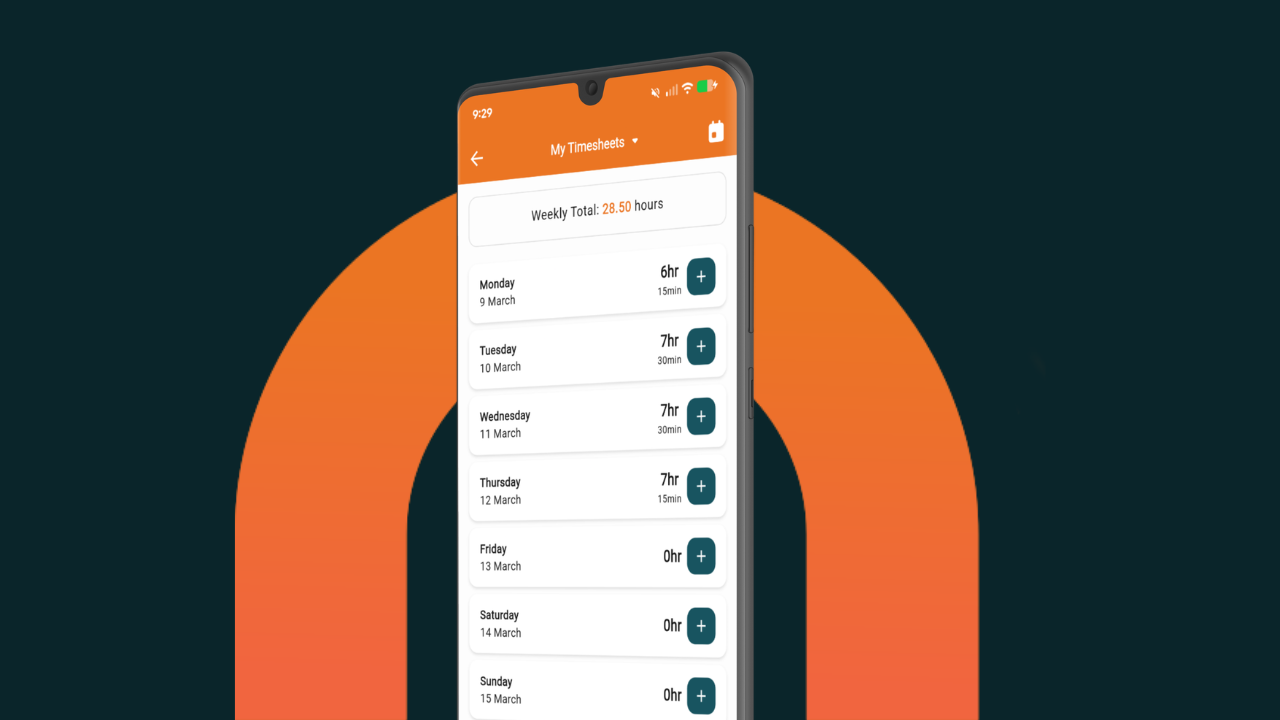
If you're a landscape construction crew of 3 or more: use job management software built for staged jobs. That's where NextMinute sits. The crew logs hours against the job stage from the mobile app on site, so labour lands on the job automatically. Supplier costs flow through from Xero or MYOB. Variations get quoted and invoiced instead of absorbed. And back-costing shows actual against estimate by job or by stage while the job's still running.
The honest catch: under three users it's not worth it. There's no crew to coordinate, and the spreadsheet is doing the job fine.
FAQs
How do I work out the true cost of a landscaping job?
Add up labour hours at their true cost including on-costs, plus materials and plants, machinery hire, subcontractors, waste and tip fees, and any variation you did but never billed. Set that total against what you invoiced. The gap is your real margin, which is usually well under what the quote implied.
What margin should an Australian landscaper be making?
Most landscape construction businesses target somewhere in the 20% to 30% range on cost, but the number that matters is what you're achieving, not what you quoted. Back-costing a few finished jobs is the only way to know which one you're living in.
Why do landscaping jobs blow out even when the rates are right?
Because things get left off, not priced wrong. Excavation underestimated, machinery held over the wet, waiting on deliveries, the long tail of cleanup and defects, and small variations done as a favour. Our free landscaping quote template walks the same checklist every time so less gets missed at the front end.
Can I back-cost a job that's still running?
Yes, and that's the point. Costing at handover tells you what happened. Costing weekly by stage lets you pull the excavator off site, requote a variation or have a conversation with the client while it can still change the outcome.
Does NextMinute work for landscapers specifically?
Yes. It's used by Australian landscape construction crews for quoting, scheduling, timesheets and job costing, and NextMinute is a proud sponsor of The Landscape Association. Have a read of how Vast Landscapes run their jobs on it.
The bottom line
You can't fix a margin you can't see. Break your landscaping jobs into stages, capture crew hours on the day, land every supplier and hire cost on the job, quote the small variations, and check actuals against estimate every week rather than at handover.
Do it on a spreadsheet if you're a one or two-person operation. If you've got a crew of three or more running multi-week builds, NextMinute does it in the background off the timesheets your crew's already filling in, from $199 a month with no lock-in. There's a 10-day free trial, no credit card, and a Sydney-based team who'll set it up with you.
Back-cost the last job you finished. It's a sobering hour, and it's the most valuable one you'll spend this month.